
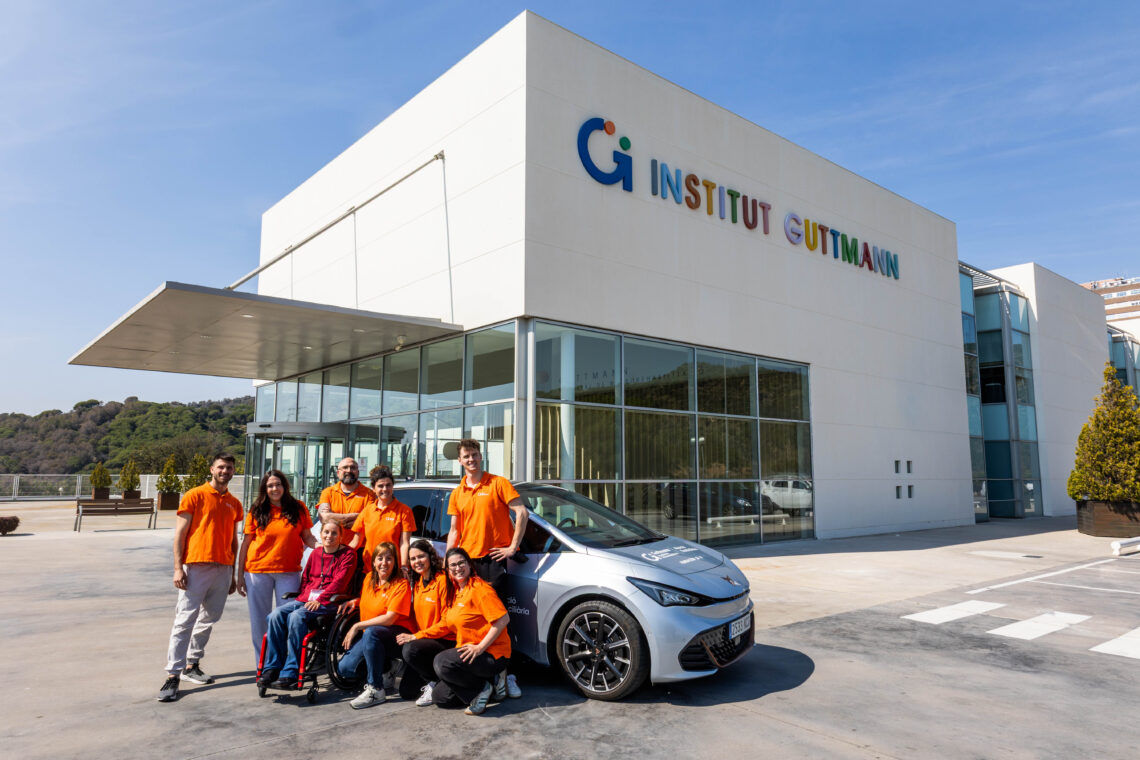
The social and family reintegration of people affected by a spinal cord injury, an acquired brain injury or any other disability of neurological origin, often becomes a difficult situation as a result of the high degree of complexity that their care can represent for those people, family members, caregivers and professionals, both health and social, who are not used to the specificities.
The Neurorehabilitation Specialized Evaluation and Support Team (EASE) is a multidisciplinary team that acts at any of the different care levels of the health and social care networks with the aim of improving the effectiveness of the patient’s reintegration into their usual environment, guaranteeing the suitability and continuity of care, promoting quality and providing quality coordination with the specialized reference hospital and the transfer of specific knowledge and skills of the neurorehabilitation process to all professionals in the different networks.
Specific Programs developed throughout 2025:
- Support program for high-complexity patients returning home and managing complications
It is a set of specialized multidisciplinary actions aimed at facilitating home reintegration, ensuring continuity of care, promoting comprehensive care quality and knowledge transfer regarding the management and monitoring of complications in people affected by neurological sequelae.
During 2025, a total of 366 patients were treated and 1,223 intervention sessions were conducted. Details are shown below:
| REASON FOR ATTENDANCE | PATIENTS |
| Home assessment | 67 |
| Training other professionals in SSP change | 6 |
| Connection to resources | 72 |
| Comprehensive management of pressure ulcers | 42 |
| Education for families and/or caregivers | 23 |
| Comprehensive specialized assessment | 53 |
| Frail Patient Program | 22 |
| Advice on assistive products | 2 |
| Training other professionals in specific techniques | 4 |
| Rare and Neuromuscular Diseases Unit | 8 |
| Management of neurogenic bowel | 36 |
| Information and social guidance | 21 |
| Continuity of care – CAI El Carme Agreement | 10 |
- Community occupational therapy program for people affected by acquired brain injury and their families.
This is a community-level program to support people who have suffered severe brain damage and who have difficulty generalizing learning in terms of Activities of Daily Living (ADL) and carrying out a routine of meaningful activities in their home environment.
During 2025, a total of 37 patients were treated and a total of 249 intervention sessions were carried out.
- Community mental health program for patients with acquired brain injury and their families.
It is a community program whose main objective is to improve quality of life by facilitating reintegration into the home and social environment, and by optimizing opportunities for full and desired occupational participation. It is aimed at adult patients (between 18 and 70 years old) affected by moderate to severe acquired brain injury who present with behavioral, emotional, or mood disorders and difficulties in occupational participation.
During 2025, a total of 36 patients were treated and a total of 249 intervention sessions were carried out.
- Home-based neurorehabilitation hospitalization program for patients with spinal cord injury.
An individualized home-based neurorehabilitation hospitalization program, with an intensity adapted to the patient’s clinical and functional characteristics, but with a clear person-centered approach. It is designed for patients with acute spinal cord injuries who are unable to undergo intensive inpatient treatment in the hospital.
A total of 22 applications have been assessed with a total of 621 intervention sessions.