
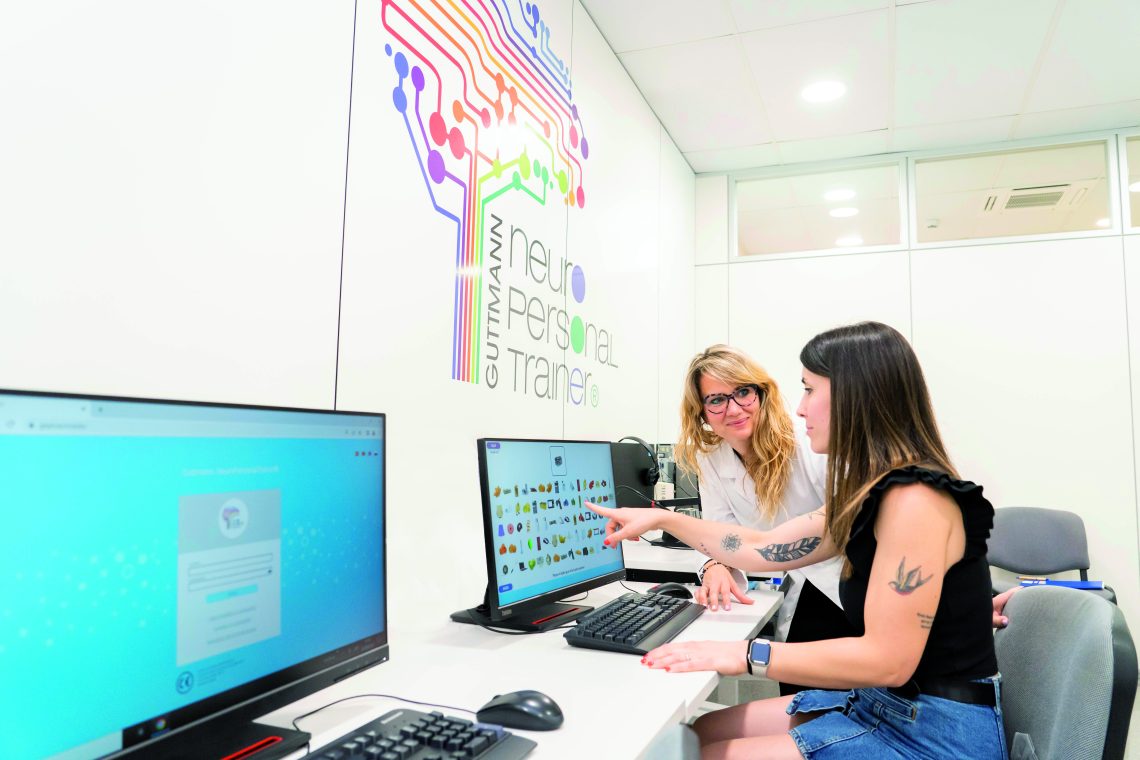


In 2025, the Foundation continued its commitment to promoting the innovative proposals of Guttmann, NeuroPersonalTrainer®.
This year, we continued expanding the services offered by the platform throughout Spain, reaching over 4,400 patients and exceeding 170,000 sessions across more than 230 centers nationwide. We also continued the technological transformation of the platform towards a new version that will facilitate access to services for professionals and patients worldwide. Its launch is planned for the end of 2026. This milestone will be the first step in building an ecosystem of digital services for cognitive rehabilitation for our users.
We have exceeded 170,000 annual sessions among the more than 230 centers that use our Services and benefit from the activities of Guttmann, NeuroPersonalTrainer®
A study demonstrates the benefits of cognitive rehabilitation with the Guttmann NeuroPersonalTrainer tool in patients with multiple sclerosis
A team of professionals from various centers in Catalunya published a study in April in the journal NeuroImage: Clinical demonstrating the effectiveness of cognitive rehabilitation using the Guttmann NeuroPersonalTrainer (GNPT) tool in people with multiple sclerosis (MS). The study, conducted at the Hospital Clínic of Barcelona, concludes that cognitive rehabilitation using GNPT in MS patients not only has a positive effect on verbal memory but also increases the connectivity of brain networks related to cognition. The findings reinforce the value of cognitive rehabilitation as a tool for improving cognitive skills and neuronal plasticity, reaffirming its usefulness as a reliable intervention for the clinical management of cognitive deficits in MS patients.
The aim of the trial was to evaluate whether rehabilitation using GNPT can improve cognitive function and induce measurable changes in brain connectivity in MS patients. To this end, 70 patients diagnosed with MS were divided into two groups: one that received active cognitive therapy, with exercises of increasing difficulty adapted to their individual performance, and a control group that received low-intensity static therapy. The training was conducted over 12 weeks, and cognitive functions were assessed before and after the program, as well as after 10 months of follow-up. In addition, brain MRIs were performed before and after the intervention.