
The climate footprint of the health sector is equivalent to 4.4% of global emissions, equivalent to the annual emissions of 514 coal-fired power plants. If we bear in mind that sustainability and health are intrinsically related, the environmental responsibility of the Guttmann Institute, as a welfare organization, is one of the fundamental pillars in its management.
To achieve sustainable management in all its areas, it is strongly committed to the implementation of sustainable strategies with the objective of preserving and respecting the planet’s natural resources and implementing actions that have a positive impact on its environment and society.
Recognizing that climate change affects the health of the population is an act of responsibility that the Institut Guttmann Foundation assumes as one of its priority objectives, taking on the challenge with a proactive attitude.
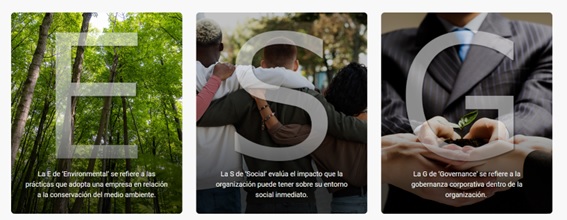
In this context, the ESG sustainability criteria have acquired special relevance in the institution regarding their application in:
ENVIRONMENTAL SUSTAINABILITY. It includes those principles that have a positive and protective impact on the environment. An example can be to reduce the carbon footprint or the emission of greenhouse gases.
SOCIAL SUSTAINABILITY. Actions related to labor and human rights aspects are framed here. Diversity in organizations, social inclusion and the management of the different communities in the world where it operates are part of these principles.
INSTITUTIONAL SUSTAINABILITY refers to ethical values and good practices. The quality and transparency of process management, as well as the establishment of effective internal regulatory compliance policies to prevent, identify and treat risks encompass these criteria.
Specifically, within the axis of ENVIRONMENTAL SUSTAINABILITY, we have achieved the following results:
The impact in the last 4 years has an effect equivalent to the daily consumption of 28,600 gasoline vehicles or planting 472 trees.
REDUCTION OF WATER RESOURCES, A SCARCE RESOURCE

Savings of 800 m3 of water, equivalent to 13,104 showers or the consumption of 5 households during 1 year.
- Faucets with sensor.
- Thermal covers to prevent evaporation.
- Therapeutic gardens with native vegetation with programmable and sectorized drip irrigation systems that disconnect in case of rain, with a 38% reduction in irrigation water in the last 5 years.
- Transfer of water prior to cleaning the accumulators.
- Awareness campaigns with the installation of consumption control meters.
IMPROVEMENT OF ENERGY EFFICIENCY
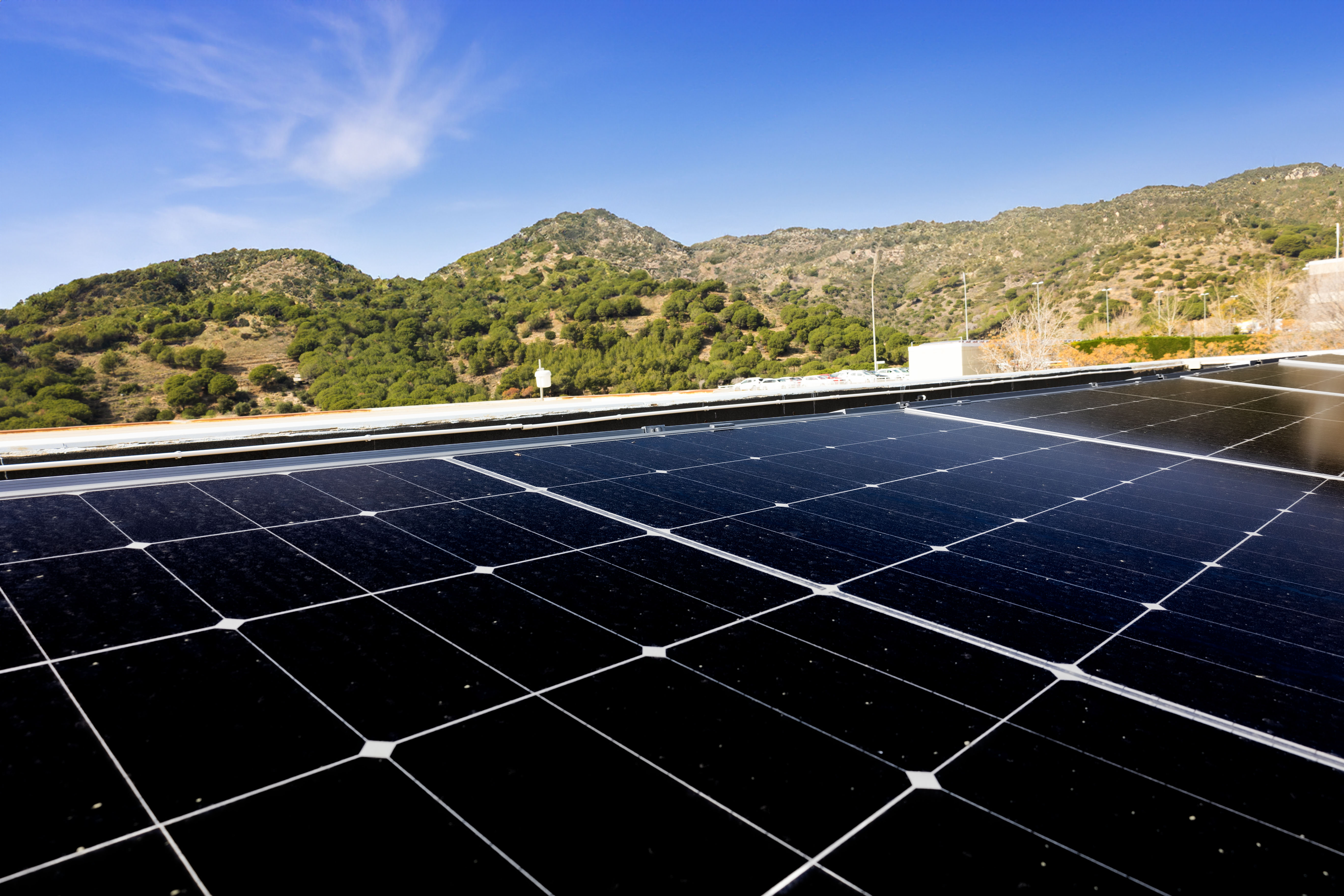
With 14.93% self-consumption of the energy we consume in 2025 and a 95.19% implementation of LED lighting.
- Placement of 608 photovoltaic panels.
- Replacement of traditional lighting by LEDs.
- REDUCTION OF CO2 EMISSIONS.
- A 10.94% reduction in CO2 emissions to the atmosphere in the last 4 years. In total, in the last 4 years, with these reductions, an effect equivalent to the daily consumption of 28,600 gasoline vehicles or planting 472 trees is obtained.
PROMOTION OF SUSTAINABLE MOBILITY
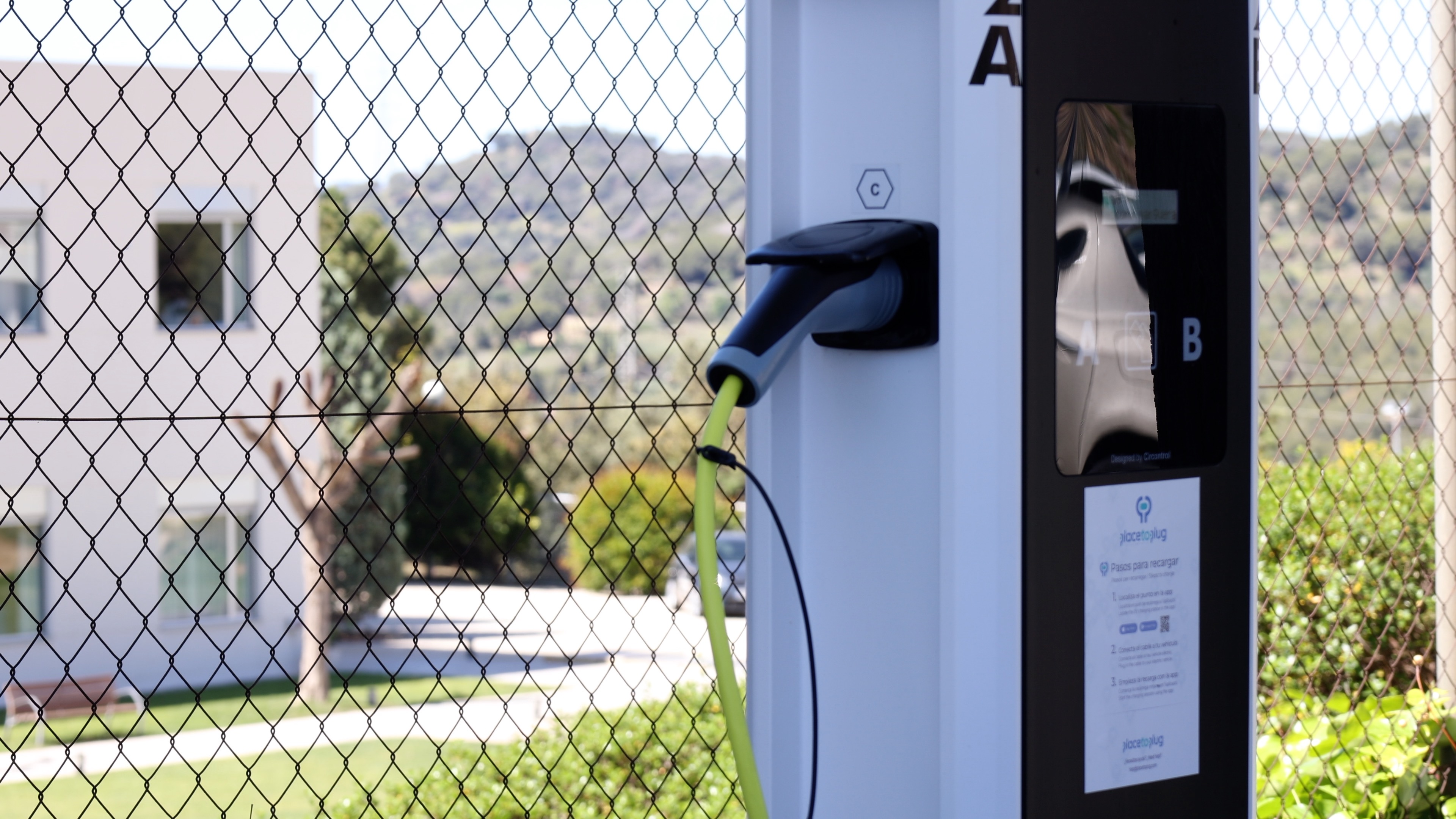
With a decrease of 15.3 tons of CO2.
- Promotion of sustainable mobility.
- The use of hybrid vehicles and the installation of 10 electric chargers between the 2 centers.
- Territorial Consolidation assistance program that avoids unnecessary displacement of patients and their families to the hospital and brings treatment and rehabilitation, where possible, to centers close to their homes. Thus, we have an impact on emissions but also on the saving of economic resources and time, putting the well-being of patients and families at the center.
OPTIMIZATION OF WASTE SEGREGATION

With a reduction of 2.73 Tn of CO2 reduction and 1011 meals saved.
- Introduction of efficient tools for the control of organic waste.
- Currently, 30 different types of waste are segregated.
A SUSTAINABLE ARCHITECTURE
Implementation of sustainable construction practices with respectful materials.
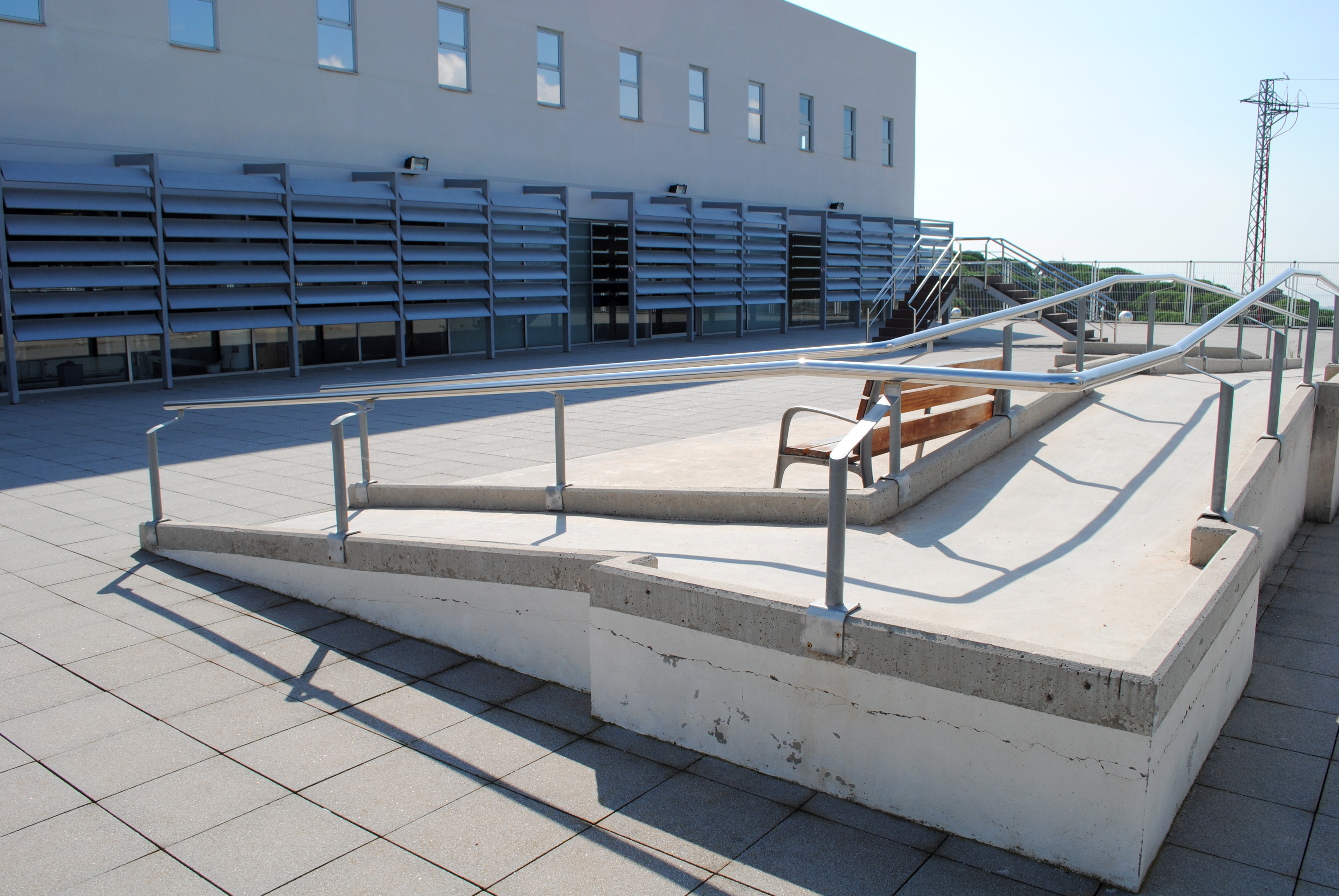
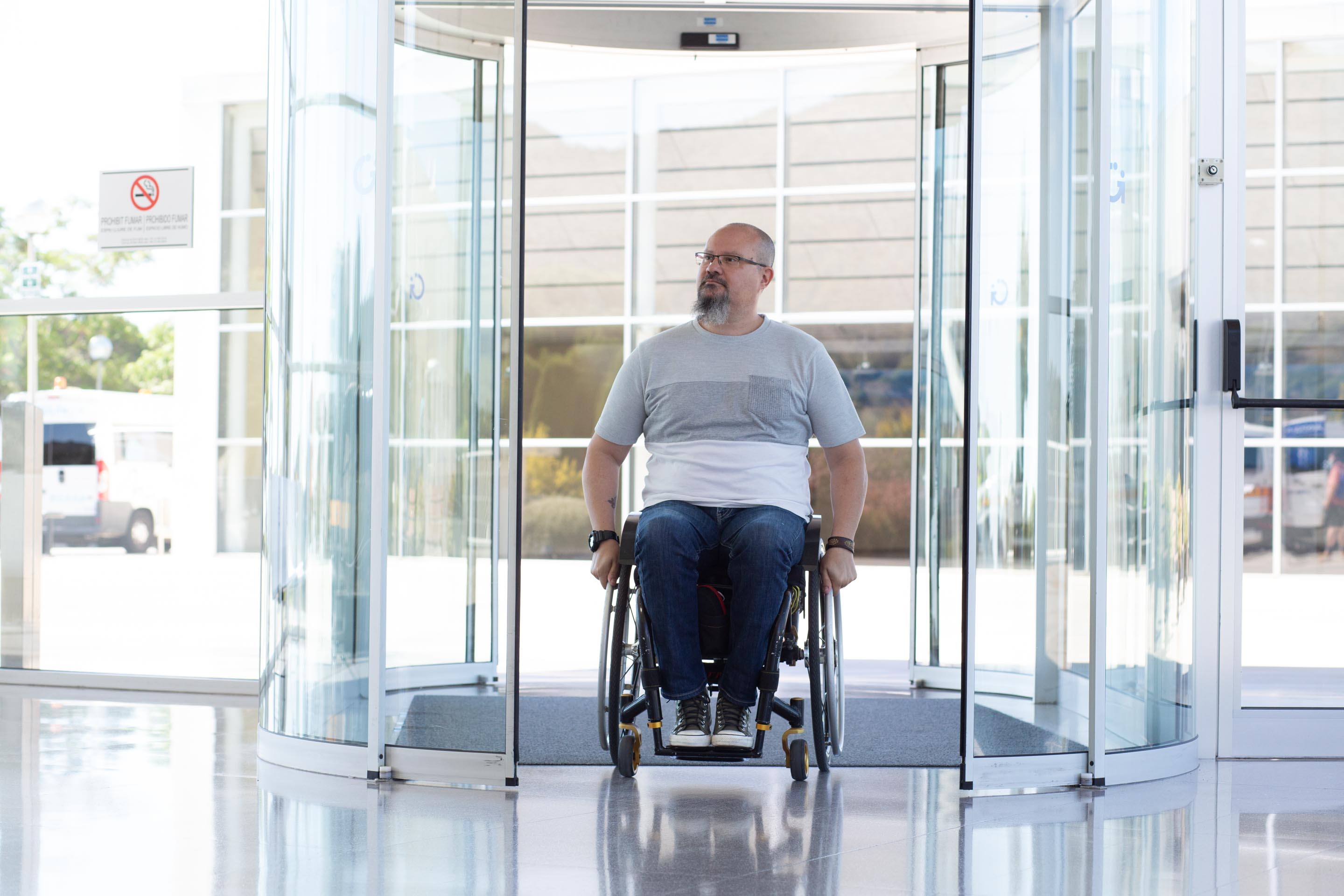
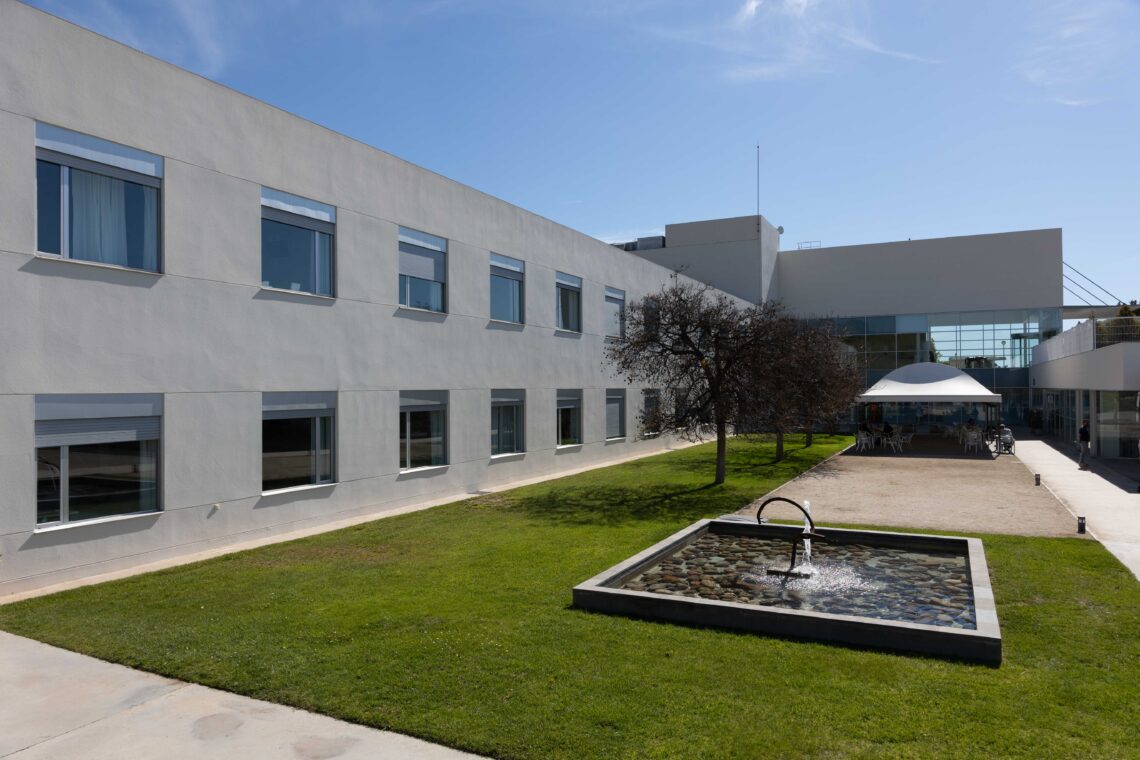
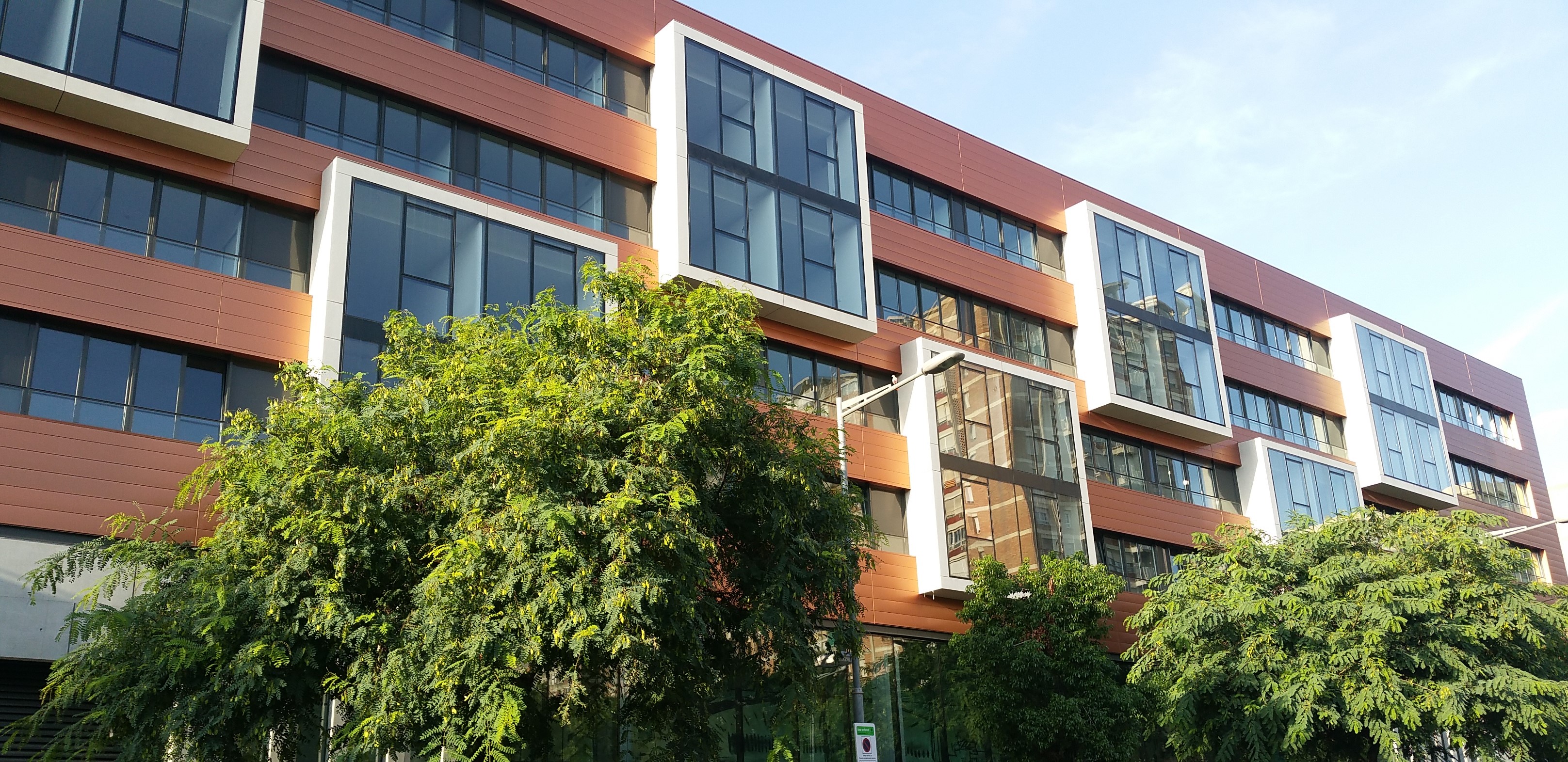
In 1993 with the start of the design of the Neurorehabilitation Hospital in Badalona, and later in the Guttmann Barcelona building in 2019, they were conceived with sustainability criteria:
- The reduction of air conditioning consumption.
- The use of natural light with large windows.
- Sustainable roofs are burdened by thermal insulation.
- The use of respectful materials that require minimal maintenance.
- The Neurorehabilitation Hospital is integrated into the natural environment of the Parque de la Cordillera de Marina with gardens of more than 10,000m2. We use ecological systems for cleaning and maintaining the understory with our sheep, reducing the use of machinery and avoiding emissions into the atmosphere.
- The Guttmann Barcelona building has BREEAM certification and energy rating A.
A POLICY OF CONTINUOUS IMPROVEMENT
We develop a continuous improvement policy that also applies to the most demanding certifications.
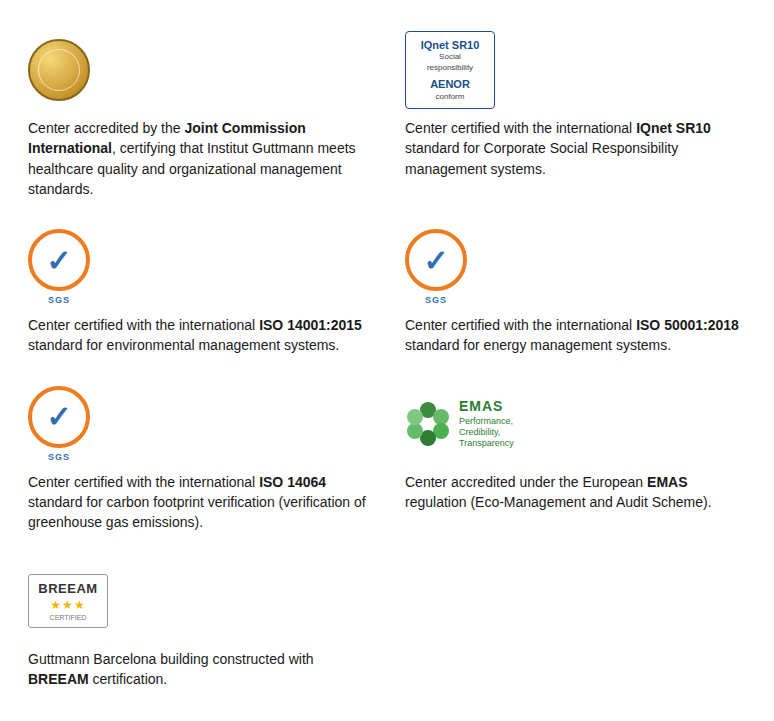
INTERNATIONALLY RECOGNIZED
Guttmann also received this 2024 the Award for the Best Experience on technological renewal and environmental sustainability for the presentation at the II Congress of Clinical and Health Management explaining our practice in this area.