
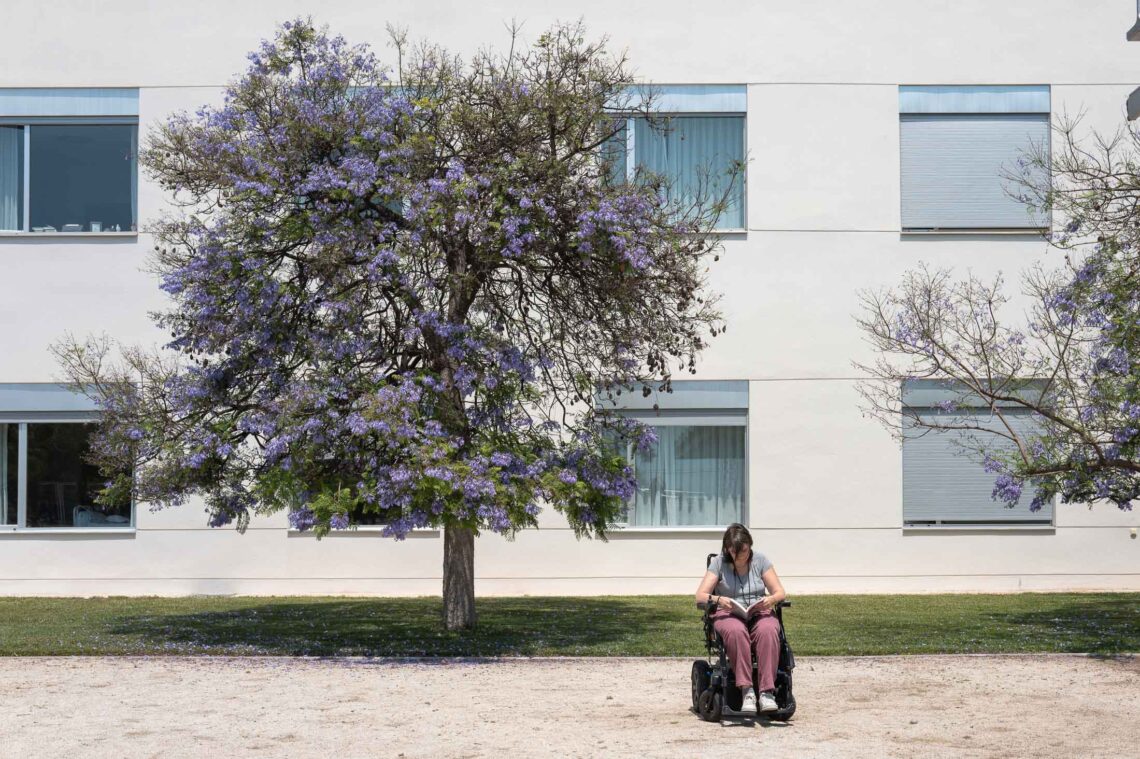

Humanizing healthcare means recognizing the central role of the patient and their family in the care process and involving them by providing them with appropriate information so they can proactively participate in decision-making. It also means treating people as individuals capable of making decisions and participating in their own healthcare. Whenever possible, humanizing healthcare involves empowering patients to take responsibility for their health, moving away from paternalistic caregiving relationships; understanding that patients are individuals with rights, responsibilities, and freedom of choice.
Humanizing care involves putting the patient at the center of our attention and reinforcing their personal autonomy to have active and empowered patients.
At Guttmann, we want to listen to the deep needs of our patients and work with them to transform the healthcare environment to achieve better health and well-being outcomes. Therefore, by placing the patient and their family at the heart of our care, we aim to give them a voice and an active role throughout the entire care process. This will allow us to better understand the patient’s perceptions and needs and, consequently, introduce improvements in clinical care, patient safety, and the effectiveness of rehabilitation treatments.
Humanizing also involves focusing on professionals, who are the main humanizing agents, and therefore it is necessary to promote their training and development, encourage adequate communication, guarantee a good working environment, and foster their participation.
One of our main challenges as an organization is to improve the humanization of care at Guttmann Hospital and promote the empowerment of patients and their families.
At the Institut Guttmann Foundation, we work to ensure that people with disabilities achieve the highest possible level of personal autonomy, a better quality of life, and full social inclusion and participation.
The 5 pillars of our Humanization Plan
Axis 1: The culture of humanization
Creating a humanizing culture involves managing changes in: attitudes, uses, customs and styles, individual and group behaviors, etc., with the aim of guiding everyone towards more humanized care and thus improving the experience of patients and their families.
Axis 2: Information and personalized support
Personalized care is a key element in improving humanization. Recognizing the uniqueness of each patient means offering individualized responses to their needs and expectations, as well as providing proactive and effective information and fostering shared decision-making.
Eje 3: Humanization in healthcare and hospitalization
Hospitalization is an intense emotional experience for both patients and their families. Therefore, aspects such as improving the physical environment, the quality of care for patients, families, and companions, comfortable spaces, quality of rest for hospitalized patients, support and companionship, preserving patient privacy, and providing entertainment and emotional well-being become important. These are just some of the aspects we work on daily to improve the patient experience.
Eje 4: Humanizing childcare
We believe that coordination with families and other community stakeholders is fundamental to providing comprehensive and personalized care for children. Furthermore, for extended hospital stays, we consider it essential to adapt facilities and create child-friendly environments, as well as to ensure their emotional well-being through recreational and social activities.
Eje 5: Humanizing management
We cannot conceive of a humanization project that does not include actions aimed at our professionals, actively listening to their concerns and responding with initiatives to improve labor relations. Likewise, we will continue to promote professional development and develop programs to enhance communication and interpersonal relationships.