
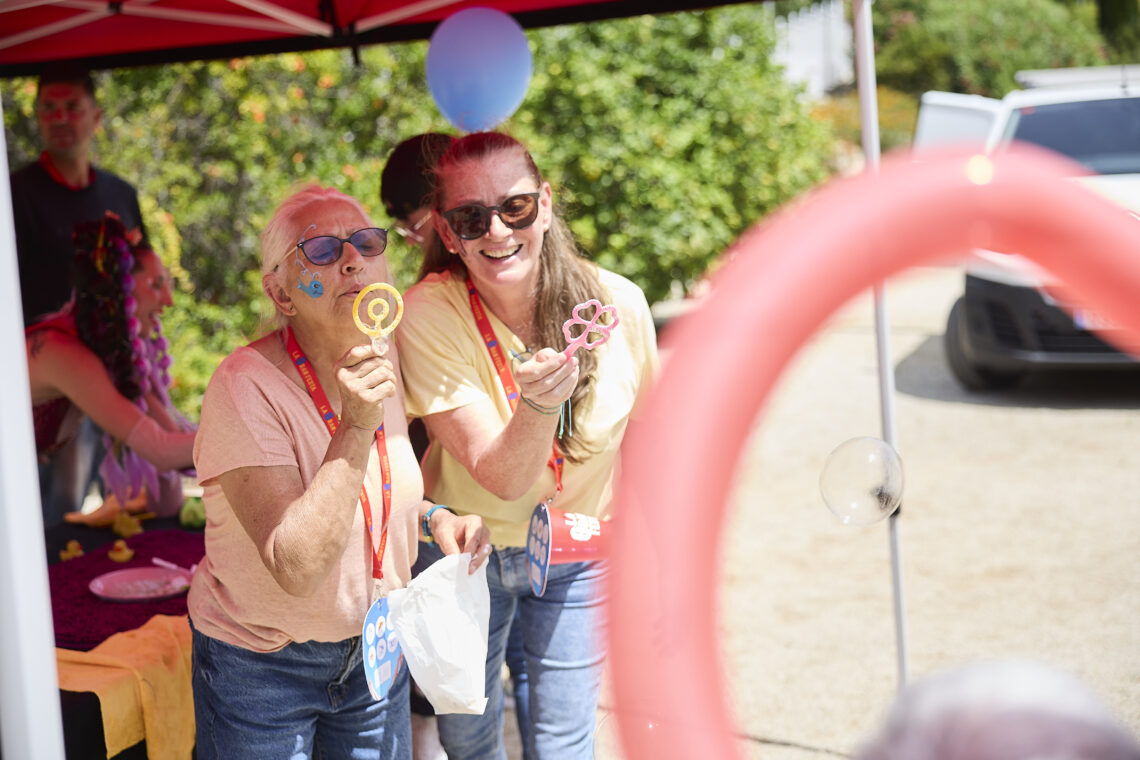
From the Social Work Area, weekly meetings, information sessions and interactive, educational and informative working groups are organized in which the participation of the family member is fundamental. The main objective of the Social Work interventions is to accompany and support patients, their families, and their close social circle, promoting the appropriate use of both their personal resources (empowerment, ability to react, organize, and cope with problems) and their environmental and family resources (the family group itself and the networks in their community (services, facilities, and support).
The biopsychosocial care model that characterizes the functional dynamics of our hospital highlights that “Neurorehabilitation must take into account the physical, psychological, social, and cultural aspects that influence the patient’s personality, their developmental stage, their way of life… developing patient-centered care strategies in each case.”
Among the activities carried out by the Social Work Department of the Institut Guttmann, we highlight two education and support programs for patients and families: the Expert Caregiver program and the Meeting Point.


Expert Caregiver
Guttmann is the only center in Spain that offers this program for patients and families affected by brain injury. The program was developed with the support of the Catalan Program for the Prevention and Care of Chronic Conditions (PPAC) and the Directorate General of Health Planning of the Catalan Government’s Department of Health.
An Expert Caregiver is defined as someone who cares for another person with a chronic illness requiring complex care, and who is capable of taking responsibility for their own well-being and self-care. They acquire skills that help them manage the physical, emotional, and social impact of caregiving, thereby improving their quality of life.
The last edition of the Expert Caregiver Program in Brain Injury was held in December 2025.
In this edition, a total of 7 family members participated, of which 5 participated regularly, and 2 participated sporadically in some of the scheduled sessions.
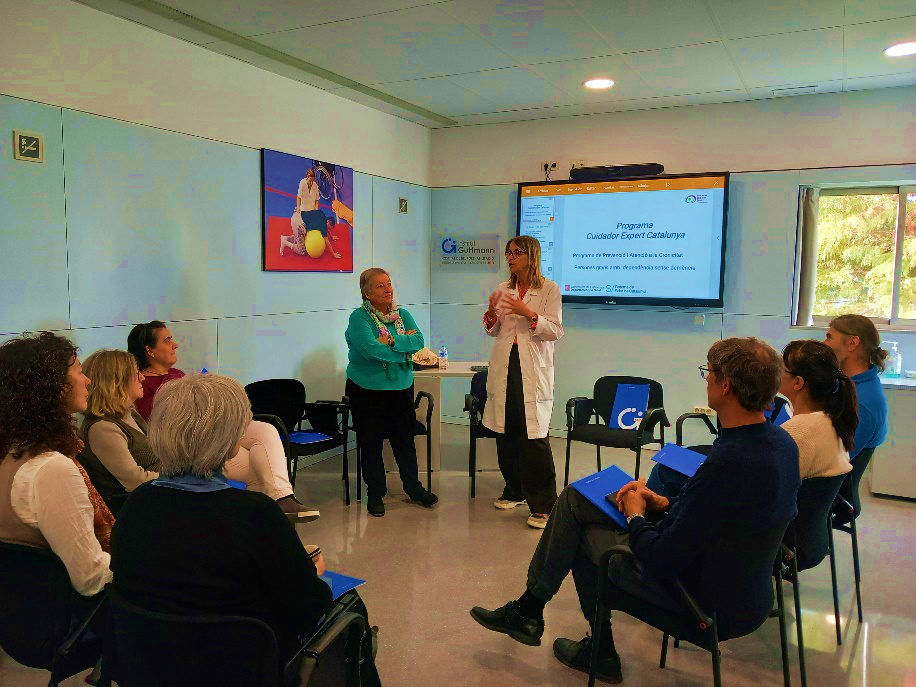
- The program aims to promote lifestyle changes to improve the quality of life and relationships between patients and their caregivers through the exchange of experiences and knowledge. One of the aspects that distinguishes this program from others is that it is led by a caregiver who is a veteran in the field, allowing them to share firsthand experiences, difficulties, feelings, reflections, and more.
- The program is structured into nine one-hour sessions, held twice a week, over approximately six weeks. Each session includes both theoretical and practical components.
- 83.33% of participants are women and 16.67% are men.
- Based on family relationships, the largest group of caregivers are mothers or fathers, followed by partners.
- Satisfaction: 4.70 out of 5 points.
Meeting point
The “Meeting Point” program is a space provided for interaction between the center’s professionals and patients and their families. It consists of educational and interactive sessions that address topics of interest related to disability in different areas (biological, psychological, and social).
The main objective is empowerment through the provision of information and feedback opportunities with relevant professionals. This complements the individual and family support already provided during the hospital stay, fostering patient autonomy and engaging families by emphasizing the importance of proactively seeking information.
In 2025, the format of the previous sessions was maintained, but the program was reduced to one day a week, taking place on Wednesdays from 4:00 to 5:00 PM at the Neurorehabilitation Hospital.
During 2025, a total of 25 Meeting Point sessions were held, with a total of 88 participants.
Accommodation program
The Institut Guttmann Foundation serves patients who come from the Spanish state, from different parts of Catalonia, as well as from abroad.
The neurorehabilitation model of the Institut Guttmann Foundation considers the family a key component, working alongside the patient and the interdisciplinary team to help individuals facing an acquired disability to regain their lives in the most fulfilling way possible.
For approximately 18 years, Guttmann’s collaboration with the Fundació Jubert Figueras has provided accommodation for a large number of families of hospitalized patients who live more than 50 kilometers from the hospital and whose vulnerable socioeconomic circumstances prevent them from finding lodging in hotels, guesthouses, or rented rooms.
In 2025, a total of 57 applications were received from family members of patients hospitalized at the Institut Guttmann Foundation, 38 of whom were accommodated in the facilities of the Fundació Jubert Figueras (FJF). Of the remaining 19 appointments, 4 could not be arranged due to lack of space, 3 were canceled because the patient ultimately did not travel, and in the rest of the cases, the resource was not suitable. Two of the families were accompanying a minor patient, and in other cases, the patient was an adult.
Apartaments Guttmann Life
Guttmann Life is a social housing complex comprised of fully adapted and automated apartments. The apartments offer a wide range of complementary services tailored to each resident. In addition, the initiative provides a complementary portfolio of personal and support services specifically designed to promote personal autonomy.

Guttmann Life is an initiative of the Institut Guttmann Foundation designed to foster the autonomy and quality of life of people with disabilities. The goal is for them to develop an independent living plan in an active, inclusive way, according to their own lifestyle.
Throughout 2025, a total of 61 users have stayed in the Guttmann Life apartments with an average occupancy of 72%.
With 26 apartments in operation, the following details the occupancy comparison to previous years:
| 2025 | 2024 | 2023 | |
| Unique users | 61 | 56 | 64 |
| Apartment occupancy | 17,7 | 17,8 | 18,2 |
| Occupancy percentage | 72% | 69,1% | 73,5% |
The average age of users in 2025 was 49.1 years. Regarding their origin, 58.3% resided in Spain, 21.7% in the rest of Europe, 16.7% in the Americas, and 3.3% in Asia.
Of all users staying at the facility this year, 80% received treatment at the Guttmann Clinic in Barcelona.

Mentor Program for Patients with Spinal Cord Injury
Hospital discharge is a pivotal moment in the neurorehabilitation process for individuals with spinal cord injuries, marked by a loss of autonomy and uncertainty regarding the personal, social, and functional changes this new reality entails.
Despite the professional support received during their hospital stay, many people experience feelings of loneliness, fear, and a lack of close role models who have faced similar experiences, which can hinder emotional adjustment and the development of a meaningful life plan.
In this scenario, peer support has become established as a complementary strategy to traditional therapeutic approaches, providing added value in the comprehensive rehabilitation process.
Scientific evidence shows that support provided by people with similar experiences contributes to improved coping with injury, personal empowerment, acquisition of practical skills, and social integration.
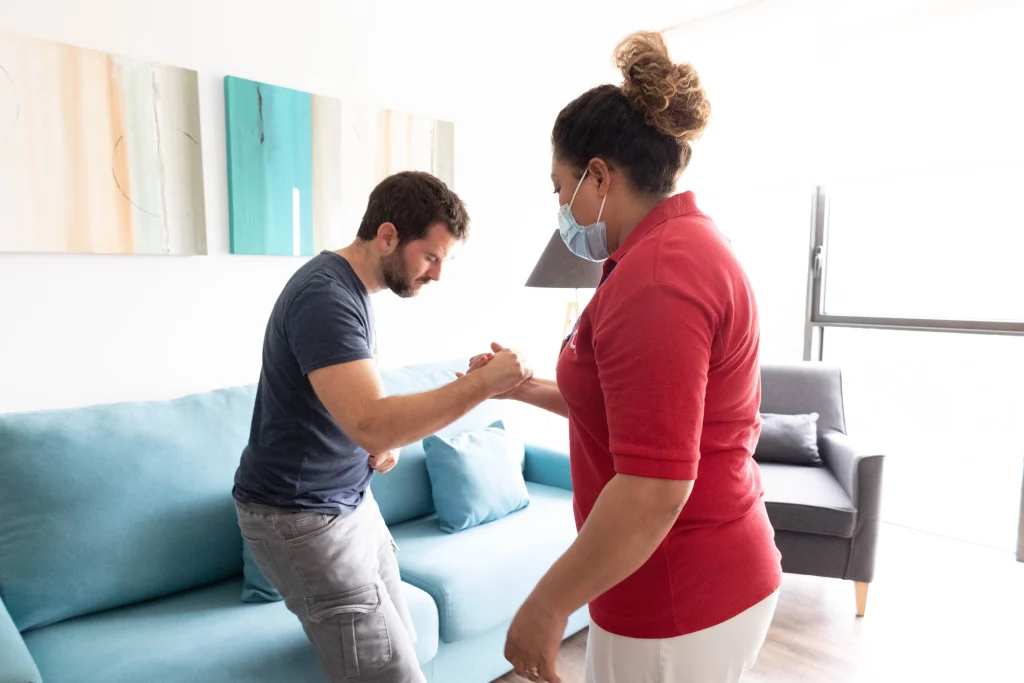
During 2025, 20 patients received support, with the participation of 8 mentors: 6 men and 2 women. Of these, 4 have paraplegia, 3 have tetraplegia, and 1 has incomplete tetraplegia. All have lived with their injuries for years and were accredited after completing specific training.

The sessions lasted between 60 and 90 minutes, with a cumulative duration of 49.50 hours and an average of 1 hour per session. The results obtained from the patients using the SCI Peer Support Evaluation Tool showed the following:
- Patients report a reduction in feelings of loneliness.
- 100% report having learned about their injury, confirming the program as a valuable learning tool.
- The experience of participating in the program has helped 66% of patients maintain attitudes that contribute to a greater sense of personal independence.
- 89% of patients report that after participating in this program they have “more confidence” or “much more confidence.”