
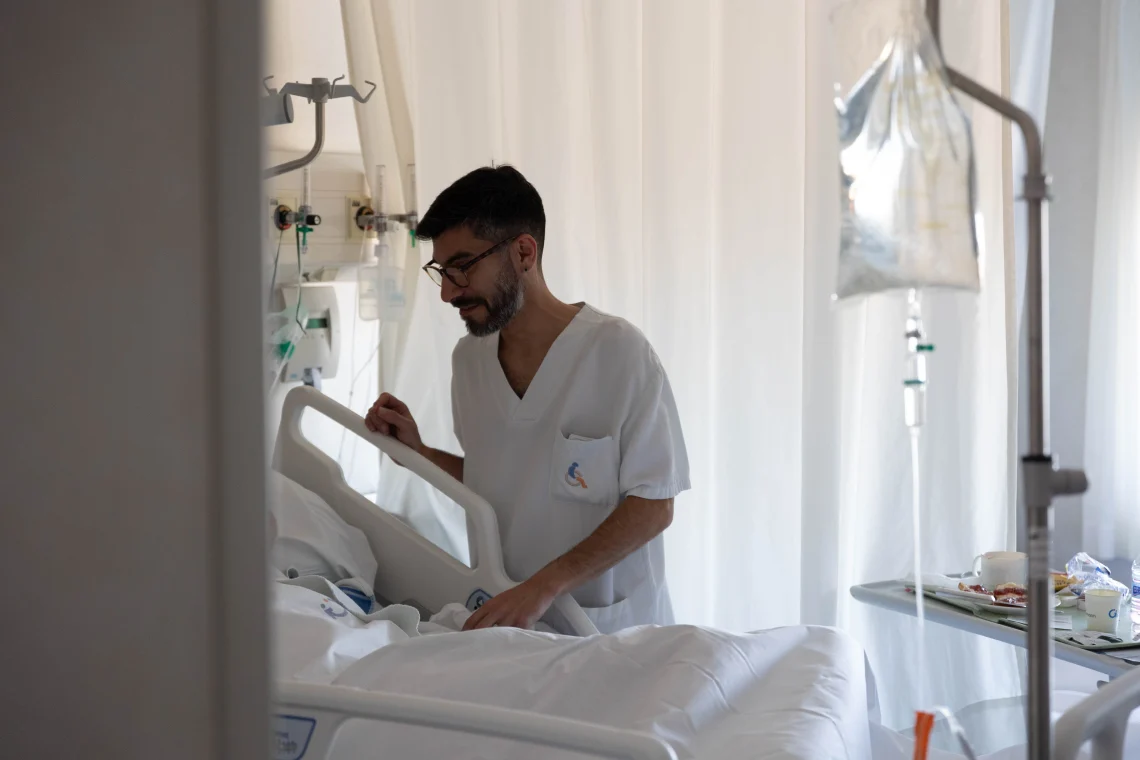
The results obtained from the study of individuals affected by pathologies other than spinal cord injury and acquired brain injury are presented below. During 2024, 72 adult patients with other pathologies (Guillain-Barré syndrome, myopathies, etc.) who cannot be grouped with the previously analyzed patients (spinal cord injury and brain injury) completed their neurorehabilitation process.
The mean age of the patients was 53 years, and there was a greater presence of men (65.28%). The most common educational level among this population group was secondary school, followed by higher education and primary school. The demographic data are detailed below:
Population by gender
Psychosocial situation
This section presents results on the fate of patients with pathologies other than Spinal Cord Injury and Acquired Brain Injury after hospital discharge, as well as on the people they live with and their level of interaction with other people and their environment.
If we analyze the living situation upon admission and discharge, some variations are observed. There is an increase in the number of people who return to live with close relatives after discharge, and especially those who must be admitted to an institution or live with a care provider. On the other hand, there is a decrease in the number of people living with roommates, close relatives, or partners, as well as people who live alone.
At the Institut Guttmann, we also conduct a social and family assessment of patients, which helps us detect situations of social risk and implement interventions tailored to each patient’s social needs. According to data from 2024, in 48% of cases, the patient’s social and family situation improved upon discharge, remained the same in 32%, and worsened in 20%.
Regarding perceptions of quality of life, the data analyzed show that after neurorehabilitation treatment, it improves in 47% of cases. The improvement, although relatively small (0.47 points on average), is statistically significant.
Improving functional autonomy
We measure the functionality achieved by our patients using the international Functional Independence Measure (FIM) scale. Patients show an improvement in functional independence of 15.26 points on their total score upon discharge.
Regarding improvement in motor function, patients discharged in 2024 improved an average of 14.21 points.