
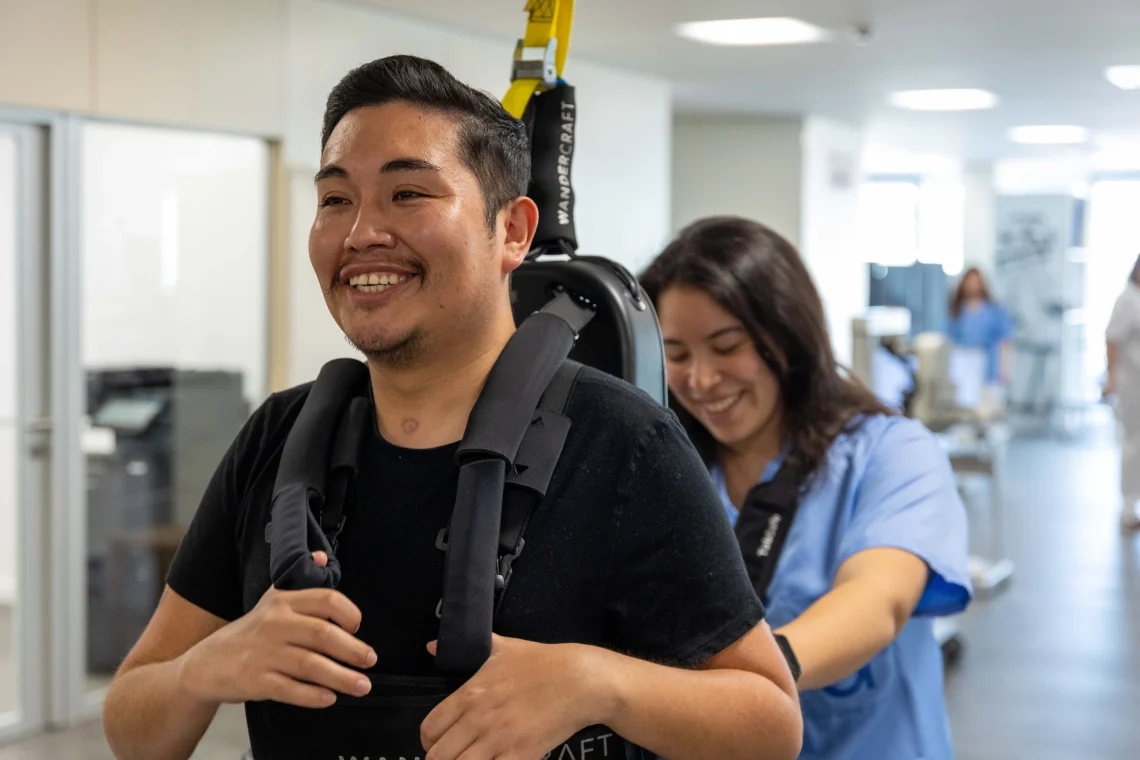

The Institut Guttmann is an internationally recognized center for neurorehabilitation, specializing in the medical and surgical treatment and comprehensive rehabilitation of people (adults, adolescents, and children) with spinal cord injuries, acquired brain damage, or other neurological disabilities.
The main objective of the Institut Guttmann is to provide comprehensive, intensive, continuous, and personalized care based on scientific evidence and with the highest human, scientific, and technical standards, taking into account that neurorehabilitation is a complex and highly specialized clinical process.
Access information about the hospital at este enlace.
Neurorehabilitation team
The Institut Guttmann neurorehabilitation team is the heart of the hospital and works together daily to provide the best specialized and personalized care to each patient. You can learn more about us on our website!
The year 2024 has been a particularly significant one for the Neurorehabilitation Hospital: We obtained the Accreditation of Acute Hospital Care Centers of Catalonia with a score of 97.65%, and we successfully passed the 6th reaccreditation by the Joint Commission International, two recognitions that reaffirm the excellence of the model.
Hospital activity
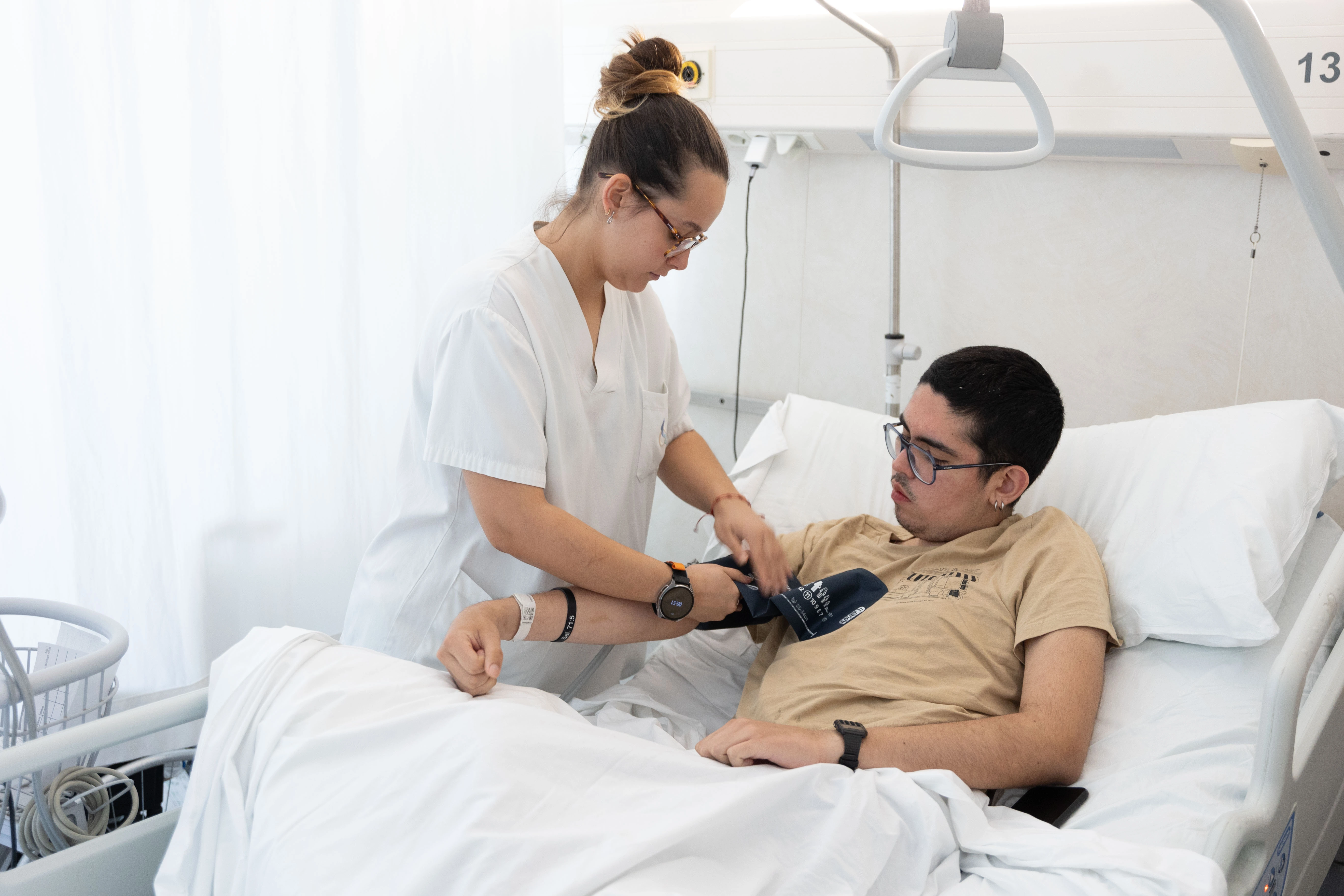
Regarding healthcare activity, a total of 5,133 people were treated during 2024. Of these, 986 were treated for the first time. In addition, 817 patients were admitted, and the children’s rehabilitation unit treated 261 children up to the age of 16, with a total of 5,904 sessions.
Since Guttmann Barcelona opened in 2019, since part of the Neurorehabilitation Hospital’s activity has been transferred to this center, for comparative purposes, the activity listed in the Guttmann Barcelona section should be added to the following.
| 2024 ACTIVITY | ||
| PATIENTS SERVED | 5.133 | |
| Catalunya | 4.842 | 94,33% |
| Other CCAA | 220 | 5,37% |
| Foreigners | 71 | 1,38% |
| HOSPITALIZED PATIENTS | 817 | |
| Catalunya | 622 | 76,13% |
| Other CCAA | 153 | 18,72% |
| Foreigners | 42 | 8,11% |
| PATIENTS SERVED FOR THE FIRST TIME | |||
| 2022 | 2023 | 2024 | |
| Total new patients | 1.039 | 1.002 | 986 |
| By type of injury | |||
| Spinal cord injury | 254 | 236 | 233 |
| Acquired brain damage | 475 | 548 | 528 |
| Others (GB, PNR, Dystrophies, Myopathies, progressive, post-polio, others) | 310 | 218 | 225 |
The age and sex distribution of patients treated during 2024 was as follows:
| PATIENTS BY AGE AND SEX | ||||
| Patients | Women/girls | Men/boys | total | % |
| From 0 to 16 years old | 107 | 186 | 293 | 5,71% |
| From 17 to 30 years old | 151 | 259 | 410 | 7,99% |
| From 31 to 45 years old | 322 | 615 | 937 | 18,25% |
| From 46 to 60 years old | 661 | 1.156 | 1.817 | 35,40% |
| More than 60 years old | 676 | 1.000 | 1.676 | 32,65% |
| Total | 1.917 | 3.216 | 5.133 | |
| % | 37,35% | 62,65% |
HIGHLIGHTS
1st phrenic nerve reconstruction surgery
In a pioneering healthcare advancement in Europe, we performed the first phrenic nerve reconstruction surgery in two patients with tetraplegia, with the goal of restoring diaphragmatic activity and enabling weaning from mechanical ventilation within one year.
This success represents a significant improvement in the patients’ quality of life and life expectancy, offering them greater respiratory autonomy and reducing their dependence on assisted technology.
The procedure was led by a multidisciplinary team of experts, within the framework of a collaboration between the Institut Guttmann and the Germans Trias i Pujol Hospital, and with the advice of Dr. Matthew R. Kaufman of the Institute for Advanced Reconstruction (New Jersey, USA) and the UCLA Medical Center (Los Angeles, USA).
Advances in the use of exoskeletons
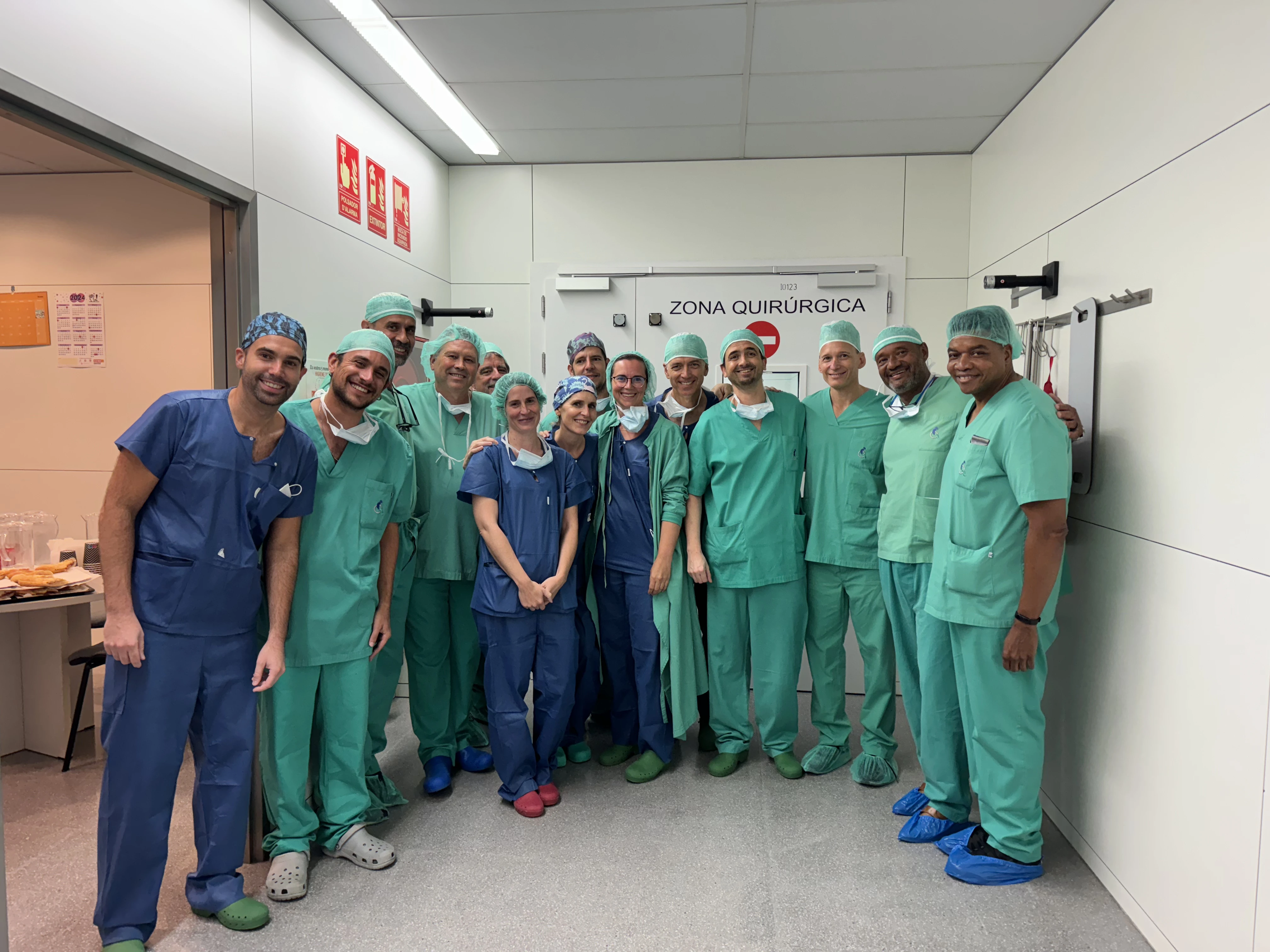
In 2024, a study was conducted with several exoskeletons to advance gait rehabilitation. The Functional Rehabilitation Department has taken a significant step in the use of state-of-the-art exoskeletons to improve patients’ walking ability, demonstrating a clear commitment to technological innovation in neurorehabilitation.
In this context, rigorous testing was conducted with four advanced exoskeletons: Rewalk (Israel), ABLE (Catalonia), Wandercraft (France), and HAL (Japan) to analyze their performance and identify the most efficient options tailored to each patient’s needs. Following these tests, the ABLE exoskeleton was acquired.
These tests demonstrate the institution’s commitment to integrating cutting-edge technology to provide more effective and personalized solutions to enhance functional recovery. This also reflects our commitment to the ongoing search for and use of innovative technologies that transform treatment standards in neurorehabilitation.