
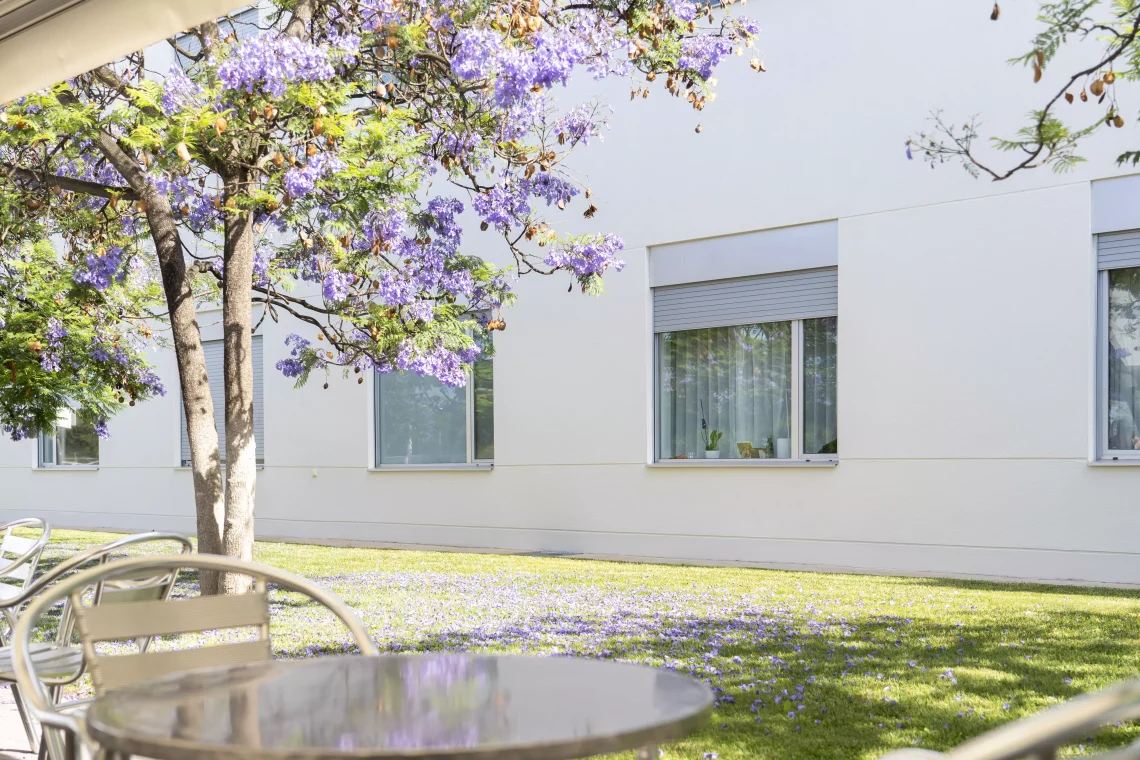
One of the main commitments of the Institut Guttmann , as set out in its Mission, Vision and Values, is to be an organization of excellence, sustainable and respectful of the environment. For this reason, it has a demanding Environmental and Energy Policy that includes the strategies and values that must govern the institution in terms of respect for the environment and energy. It is based on the Strategic Plan 2020-2025 and the international certifications ISO 14.001, ISO 50.001 and the European EMAS recognition are its greatest exponents.
From the Corporate Responsibility Policy, the Environmental and Energy Plan and the Environmental and Energy Annual Objectives Program are derived. The Environmental and Energy Plan specifies the operational objectives included in the Institution’s annual General Program, the approval of which is annual and rests with the Management, being also subject to consideration by the Board of Trustees in its basic lines.
The Institut Guttmann has a manual of good environmental and energy practices that indicates the best environmental and energy practices that can be implemented in each process or area of the institution.
Regarding the objectives of environmental preservation and energy saving
- We continued to run awareness campaigns aimed at workers, patients, family members and other users, informing them of the importance of our collective and individual commitment to the environment (segregation of waste, energy saving, silence, etc.), to preserve and maintain our quality of life in any of our areas.
- Periodic audits have continued on the classification of the different waste, following the implementation of a selective waste collection system for its treatment and recycling.
- During this year 2023, the Environment Committee has met twice, following up on objectives and certifications, providing new ideas and all areas have been informed by their representatives and managers.
- The air conditioning of the different areas of the center has been controlled, adapting the temperatures to the existing needs in each period.
Activities at the Neurorehabilitation Hospital:
- In accordance with the established schedule, during this year we changed the lighting to LEDS in the following locations, improving the lighting and its consumption, as well as the safety of users. Level -1: Functional Rehabilitation Pier, level -2: Room CGBT2, Morgue, Clinical History Archive, Maintenance Warehouse, Warehouse B33 and Warehouse B34.
- Following the planning, installation of new photovoltaic panels on the roofs of level +1.
- The carbon footprint has been calculated, obtaining 1,776.73tCO2 emitted during the year 2022.
- We have implemented water saving measures, turning off the irrigation water in case of rain.
Performances at Guttmann Barcelona:
- 2 double chargers for electric vehicles have been installed.
- Study for the installation of photovoltaic panels, according to possible aid and subsidies.
Materials and consumption
The consumption of products and materials in the Guttmann Institute is based on the basic materials of a hospital. Below are the quantities consumed during the last 3 years of the most relevant products:
| 2021 | 2022 | 2023 | |
| Oxygen (m³) | 12.842,12 | 11.445,35 | 12.372,63 |
| Medicinal Air (m³) | 17.580,38 | 26.710,74 | 23.723,16 |
| Office paper (t) | 3,1173 | 3,0523 | 2,7533 |
| Paper hand towels (t) | 3,1130 | 3,5282 | 3,5286 |
| Toilet paper (t) | 2,2580 | 2,7848 | 2,6268 |
| Diapers (t) | 5,7926 | 6,8299 | 9,4868 |
| Syringes (t) | 0,2832 | 0,3460 | 0,4883 |
| Sodium hypochlorite drinking water (t) | 0,2560 | 0,2750 | 0,3000 |
| Sodium hypochlorite soap (t) | 0,4700 | 0,3700 | 0,3900 |
| Water softener salt (t) | 1,5750 | 1,9250 | 0,1750 |
| Dishwasher detergent (t) | 1,4810 | 1,1290 | 1,5500 |
| Degreaser (t) | 0,2200 | 0,3550 | 0,1700 |
The 2023 Environmental Declaration details the historical evolution of these consumptions, as well as the weighted values with respect to the number of people who work there.
With regard to energy consumption, the Institut Guttmann encourages the responsible use of the three sources of energy that supply the hospital and which are all provided by external companies.
| 2021 | 2022 | 2023 | |
| Company electricity | 2.645,54 | 2.518,793 | 2.473,844 |
| Photovoltaic Energy Generation | – | 123,250 | 157,089 |
| Total electricity | 2.645,54 | 2.642,04 | 2.630,93 |
| Natural Gas | 2.635,49 | 2.648,69 | 2.387,21 |
| Diesel / Petrol | 16,2940 | 21,1555 | 23,7105 |
| TOTAL (MWh) | 5.297,32 | 5.311,88 | 5.041,85 |
Energy intensity is one of the indicators of an organization’s energy efficiency. The Institut Guttmann calculates it as the ratio between energy consumption and annual turnover:
IE: 5.041,85 MWh / 34.315.792,91 €: 0,000146925 MWh/€.
We need 0,146925 MWh to bill 1.000,00 €.
The results of the data depend on factors such as climatology and the needs and typology of the patients assisted.
The energy consumption comparison has been:
2021: 5.297,32 MWh // 11,29 MWh per person employed.
2022: 5.311,88 MWh // 10,91 MWh per person employed.
2023: 5.041,85 MWh // 10,39 MWh per person employed.
Regarding water consumption in the hospital, 100% of the water used comes from the supply company. Consumption during 2023 was:
| m³ | |
| Sanitary use and cleaning the facilities | 12.940 |
| Watering garden areas | 7.379 |
| Total: | 20.319 |
Institut Guttmann does not recycle or reuse water consumed.
RESOURCES FOR ENVIRONMENTAL SUSTAINABILITY
In 2023, management has provided a budget that has allowed us to:
| Waste collection | 101.298,17 € |
| Replacement of bulbs by LED lightening | 4.682,70 € |
| Installation of electric chargers for vehicles | 25.326,13 € |
| PHASE 2: Installation of photovoltaic solar panels | 181.481,86€ |
| Internal certification follow-up auditISO 14001:2015, ISO 50001:2018 and Verification EMAS | 1.535,25 € |
| External audit of ISO 14.001:2015 Badalona and Barcelona certification and EMAS Verification. External audit of ISO 50001:2018 Badalona certification. | 9.147,60 € |
| Platform to identify and evaluate environmental legal requirements and industrial regulations Badalona and Barcelona | 4.731,10 € |
| Total (t) | 328.202,81 € |
In addition, the suppliers of the Institut Guttmann are subjected to an initial evaluation, before their approval, and to a subsequent periodic evaluation, based on, among other criteria, environmental aspects.
SELECTION CRITERIA
Those responsible for making the purchases should choose between the options offered by the market for goods and services according to the Institut Guttmann’s Code of Ethics and purchasing protocol, using mainly financial and quality criteria.
Sustainable purchasing criteria are also taken into account and these can reduce costs, improve the image that the institution offers patients, suppliers and professionals, and contribute to protecting the environment.
Sustainable purchasing criteria are:
- Select suppliers that have environmental certifications (ISO 14.001, EMAS, etc.).
- Choose products with ecological certification: Eco-label of the European Union, The AENOR brand – Environment, The German “Blue Angel”, The Norwegian “Nordic Swan”, The Generalitat’s Environmental Quality Assurance Badge
- Encourage the purchase of biodegradable or environmentally friendly cleaning products.
- Choose lightly packaged or refillable products that reduce waste.
- Opt for easily recyclable items packed in glass or cardboard such as paper and other office supplies.
- Comply with our ISO 14001 and ISO 50001 environmental certifications.