


In 2023, the Institut Guttmann Foundation has maintained its commitment and support to associations of people with disabilities, especially those that form part of its Social Council. Thus, Guttmann Barcelona has hosted, among others, the ASPAYM conferences and the ECOM board.
However, an outstanding initiative during 2023 in this area has been the completion of the “New Leadership to promote social innovation” Seminar aimed at the associations that are members of the Social and Participation Council and with their support, with the aim of contributing to the preparation and training of new leaders in the field of disability who help promote the necessary generational change in the sector. In this sense, the last 3 sessions of the seminar have been completed and the editing of the texts that will make up the fourth volume of the Social Innovation and Disability collection has begun and will be formally presented during the year 2024 thanks in collaboration with Zurich.
The program “New Leadership to promote social innovation” has the participation of high-level speakers, all of them recognized academics in the fields of social policies, law or associationism.
The Institut Guttmann Foundation, in addition to the assistance, scientific and teaching activities, develops actions of a social nature, and in this context promotes this seminar to delve into some of the major issues of our society that are key to understanding and facing the main challenges that we have proposed to move towards a fairer, more inclusive and sustainable model of society.

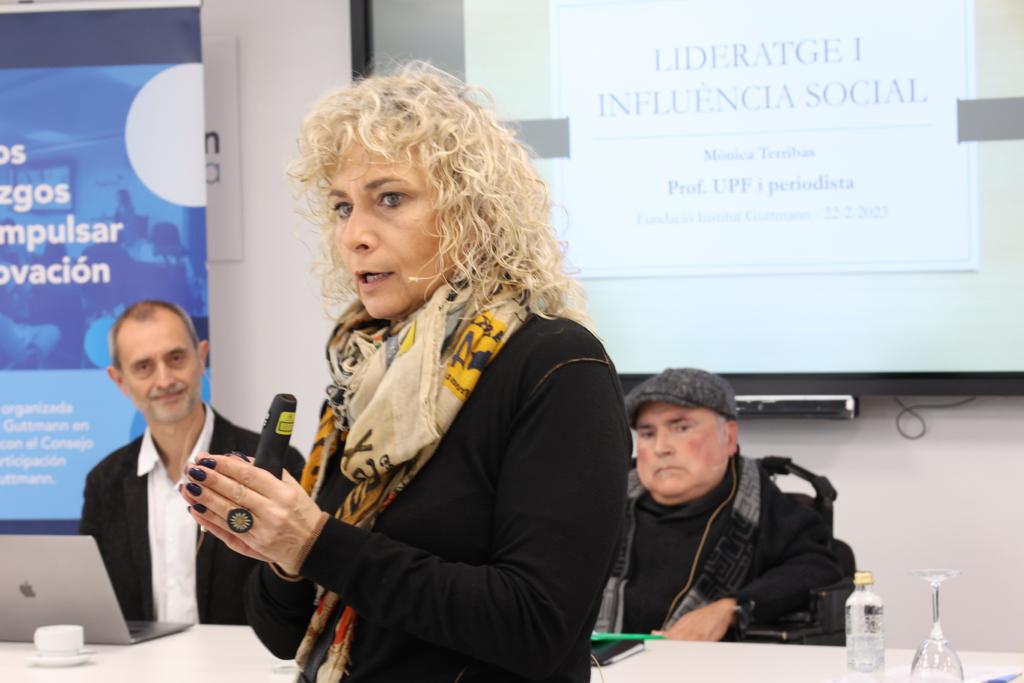
Throughout its history, the Institut Guttmann Foundation has been characterized by a high degree of social commitment and by working hand in hand with the associations that represent people with disabilities. For this reason, the Institut Guttmann has the Social and Participation Council, as an advisory body, and whose president is part of the institution’s Board of Trustees, in order to promote the participation and co-responsibility of all the actors involved in the development and objectives of the Foundation’s activities.
PARTICIPA social research project
During 2023, the PARTICIPA project has continued to be promoted and disseminated, carrying out numerous actions to communicate and disseminate the project to consolidate the cohort of volunteers. We currently have a cohort of more than 2,100 participants, who have answered almost 10,000 questionnaires. This data collection is beginning to bear fruit, and from its analysis we have already produced 3 scientific articles that are under review in indexed journals.
Therefore, the first wave of data collection of the project cohort has now been completed and we have published the first results on independent living, emotional well-being and quality of life in people with disabilities. We have prepared the first informative report on “Barriers and Facilitators of Participation in Society” to disseminate the main findings of the project.
As for the project’s forum, we can already find more than 800 publications on more than 250 different topics. Finally, it should also be noted that last May the First PARTICIPA Conference was organized at the CaixaFòrum in Barcelona, where the results were presented and some of the findings of the project were discussed. As a continuation of this day, the first report of the project’s results was drawn up, published at the end of this 2023. Finally, the resources necessary to complete the second wave of data collection and its analysis have been foreseen and planned for the next 2 years.

The first PARTICIPA day fills the CaixaForum with humor, music and social research
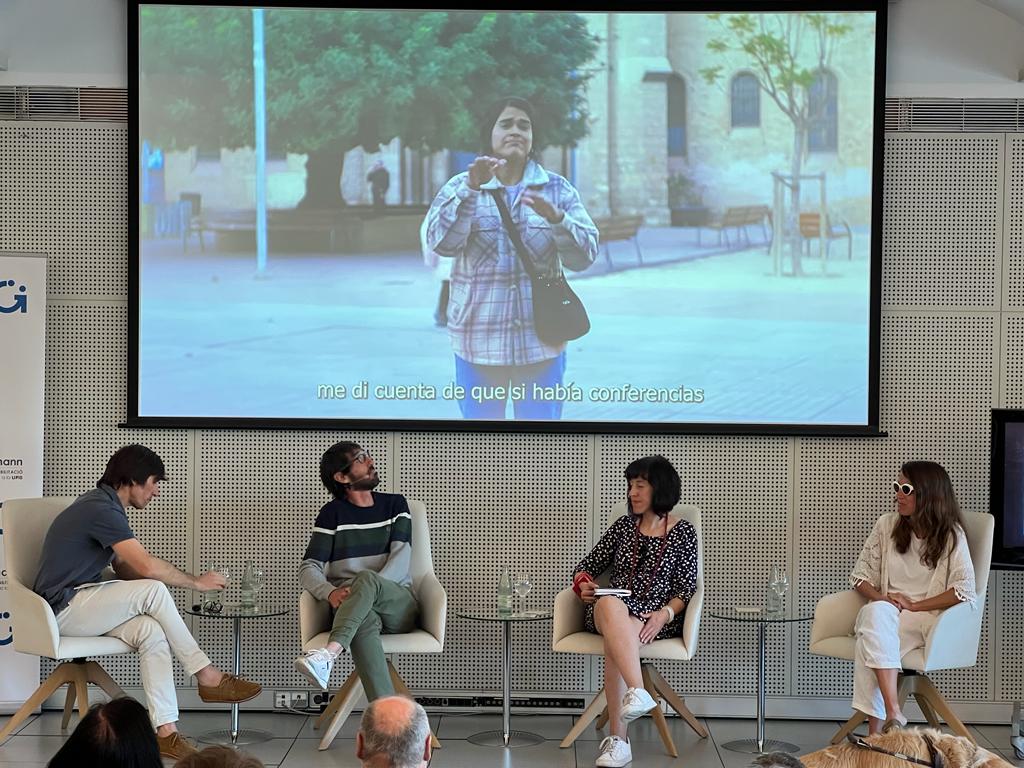
On May 17, CaixaFòrum Barcelona hosted the first PARTICIPA day in an event dedicated to the project’s 2,000 volunteers, in which they presented themselves for the first time and discussed some of the results obtained after more than 2 years of data collection .
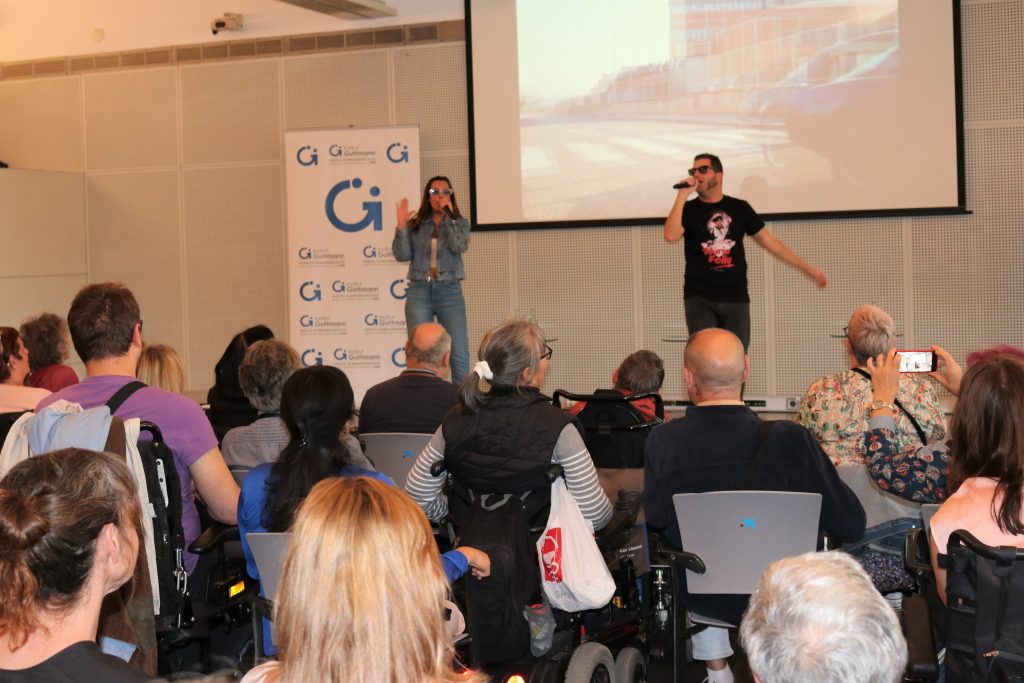
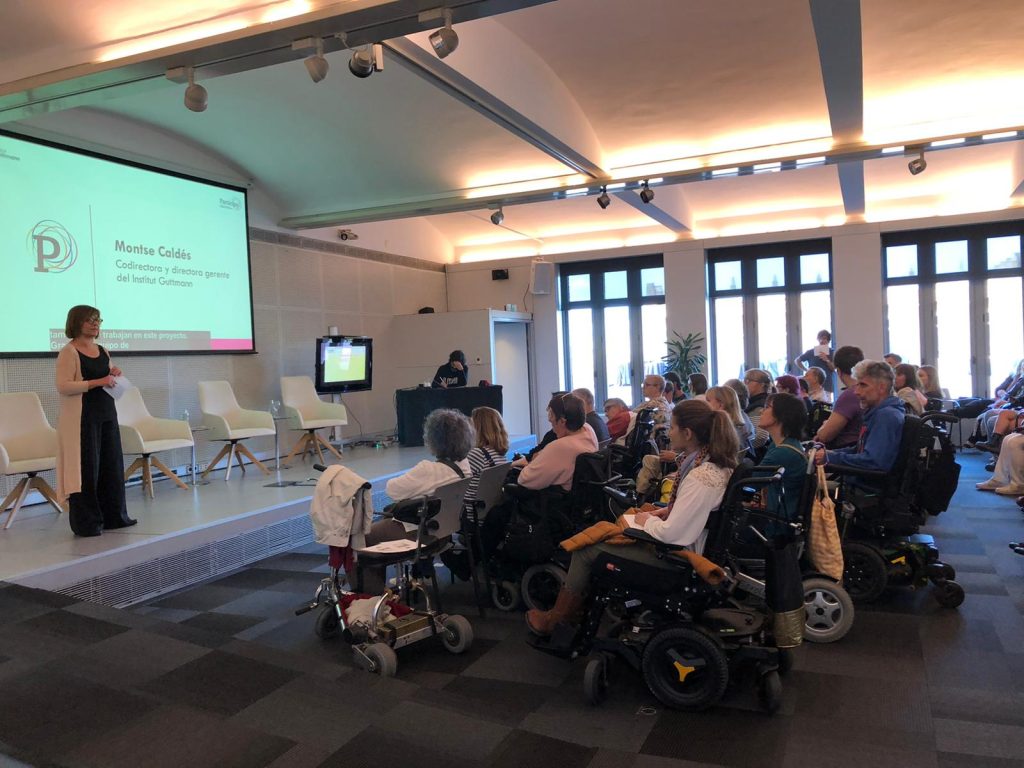
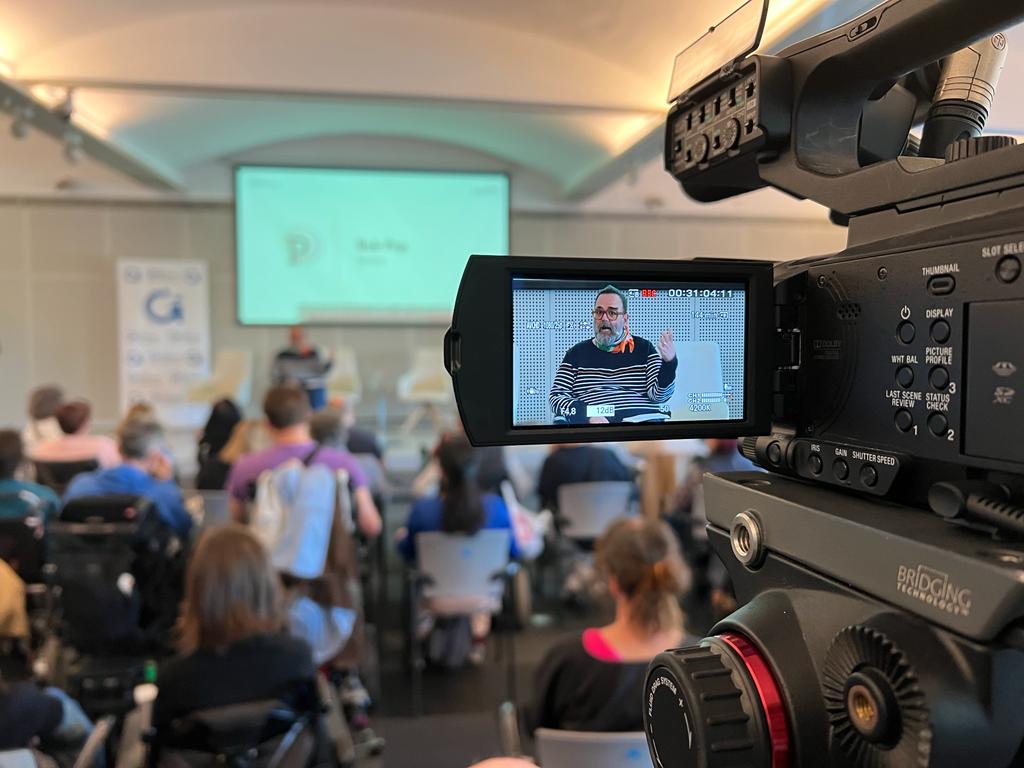
We highlight that writer Bob Pop, who is an ambassador for the project, delivered a monologue that was equal parts hilarious and vindictive. “Can you make humor from a wheelchair? Of course, if you’re in the mood. It is mandatory? No”. This is how he began his speech, before enumerating some of the numerous topics that represent a barrier for people with reduced mobility: airplanes, taxis, bars and restaurants, cinemas, theaters… “We don’t have to adapt . This is something else. To adapt the spaces to us. That we do things, if we have the desire and the possibilities. And the possibilities whet our appetites. We all win. Because the more accessible everything is, the easier it will be not to leave anyone out,” he concluded.
In addition, in a round table moderated by Joan Saurí, psychologist of the Institut Guttmann and Principal Investigator of the PARTICIPA project. Together with Maria Petit, ambassador of the Adecco Foundation and activist for the rights of people with disabilities; Siscu Prat, accessibility technician and member of the association Amputats Sant Jordi; and Montse García, head of Accessibility and Participation at the Ecom Foundation, discussed some of the results the project has produced through questionnaires and forums. Among them, that 62.6% of people with disabilities have difficulties accessing the homes of relatives and/or friends, that 28.8% consider that their means of transport is not sufficient to maintain a job and be a responsible worker and that the main support falls on the family, instead of professionals.